
Which ERP Is Best for Pakistani Manufacturers? A Complete Guide to Choosing the Right ERP Software
How Pakistani manufacturers can choose the right ERP to connect production, inventory, procurement, and accounting.

Pakistan's manufacturing industry is growing across sectors such as textiles, pharmaceuticals, chemicals, paints, engineering, food processing and steel. However, managing production, inventory, purchasing, sales and accounts through separate systems can make business operations difficult to control.
Manufacturers need accurate production planning, real-time inventory visibility, reliable costing and financial reporting to remain competitive.
This is where ERP software in Pakistan becomes an important business investment.
But with so many ERP solutions available, an important question arises: Which ERP is best for Pakistani manufacturers?
The right answer depends on your manufacturing processes, business size, operational requirements and future growth plans. This guide explains what to look for when selecting the best ERP software for manufacturing businesses in Pakistan.
What Is Manufacturing ERP Software?
Manufacturing ERP software is an integrated business management system that connects production, inventory, purchasing, sales, finance and other departments through a centralised platform.
Instead of maintaining separate records for raw materials, production activities, finished goods and financial transactions, an ERP system connects these processes.
For example, when a manufacturing company receives a customer order, its ERP system can help the team:
- Review available finished goods.
- Identify raw material requirements.
- Check inventory availability.
- Generate purchase requirements.
- Plan production activities.
- Track material consumption.
- Record finished goods.
- Manage delivery and invoicing.
- Update financial records.
This connected workflow helps manufacturers improve operational control and reduce unnecessary manual work.
Why Do Pakistani Manufacturers Need ERP Software?
Manufacturing businesses face challenges that cannot always be managed effectively through spreadsheets or standalone accounting software.
Here are some common problems:
1. Lack of Production Visibility
Without a centralised production management system, managers may struggle to identify which orders are in progress, which production activities are delayed and how much material has been consumed.
A manufacturing ERP system provides better visibility into production orders, material requirements and finished goods.

2. Poor Raw Material Management
Raw materials are a major investment for manufacturing companies. Incorrect stock records can cause production delays, unnecessary purchases and material shortages.
With inventory management software, businesses can monitor:
- Raw material availability.
- Warehouse-wise stock.
- Material receipts and issues.
- Stock transfers.
- Reorder levels.
- Batch and expiry information where applicable.

3. Inaccurate Production Costing
Manufacturers need to understand the actual cost of producing each item.
Production costing may involve raw materials, labour, overheads and other production expenses.
An integrated ERP system helps connect material consumption and production transactions with financial records, providing better cost visibility.

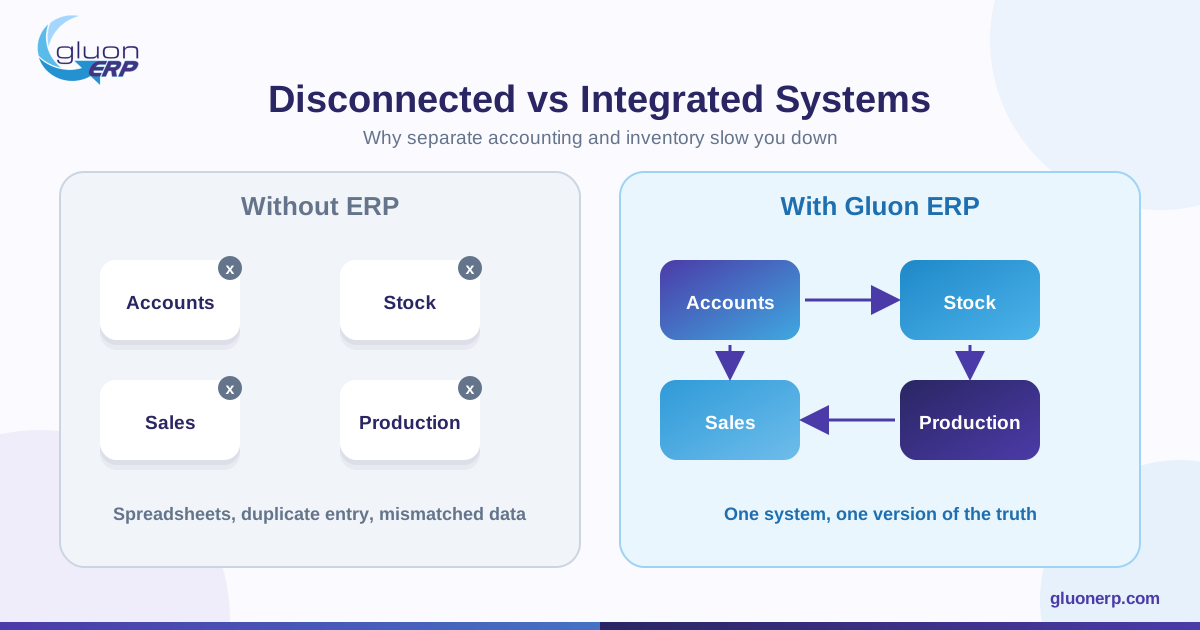
4. Disconnected Accounts and Inventory
When accounting and inventory operate separately, finance teams often spend time matching purchase invoices, stock movements, sales and payments.
The best ERP software connects these activities so that authorised transactions update relevant records without unnecessary duplicate entry.
5. Delayed Management Reporting
Business owners need reliable information to make decisions.
ERP reporting can provide visibility into:
- Production performance.
- Stock valuation.
- Purchase expenses.
- Sales performance.
- Outstanding receivables.
- Supplier payables.
- Profit and loss.
- Cash flow.

Essential Features of the Best ERP Software for Manufacturers
Before selecting an ERP solution, evaluate whether it supports your complete manufacturing workflow.
1. Production and Manufacturing Management
A manufacturing ERP should support production planning and execution.
Important capabilities include:
- Production orders.
- Material requirements.
- Bill of Materials (BOM), where supported.
- Raw material consumption.
- Finished goods production.
- Work-in-progress tracking.
- Production costing.
- Production reporting.
These features help businesses monitor production activities and maintain better control over resources.
2. Inventory and Warehouse Management
Inventory management is one of the most important components of manufacturing ERP software.
Look for features such as:
- Multiple warehouse management.
- Stock receiving and issuing.
- Inventory transfers.
- Stock adjustments.
- Physical stock audits.
- Batch and expiry tracking.
- Barcode management.
- Reorder management.
- Stock valuation.
A connected inventory system helps manufacturers maintain accurate stock records and make purchasing decisions based on actual requirements.
3. Purchase and Procurement Management
Manufacturers regularly purchase raw materials, packaging materials, machinery parts and other supplies.
An ERP purchasing module should manage the complete procurement process:
- Purchase requisitions.
- Request for quotations.
- Purchase orders.
- Goods receiving notes.
- Supplier invoices.
- Purchase returns.
- Supplier payments.
This creates better visibility into procurement costs and supplier transactions.
4. Finance and Accounting Management
The best ERP software should connect operational activities with financial records.
Important accounting features include:
- General ledger.
- Payment and receipt vouchers.
- Bank and cash management.
- Accounts payable.
- Accounts receivable.
- Trial balance.
- Profit and loss statements.
- Balance sheet.
- Tax management.
When purchasing, sales and inventory transactions are connected with accounting, businesses can reduce manual reconciliation.
5. Sales and Distribution Management
Manufacturers also need to manage customer orders, deliveries and invoicing.
A sales and distribution module should support:
- Customer quotations.
- Sales orders.
- Delivery challans.
- Sales invoices.
- Sales returns.
- Customer ledgers.
- Receivables management.
- Sales reporting.
This helps businesses maintain a connected order-to-cash process.
6. Tax and Digital Invoicing Integration
For Pakistani businesses, local tax requirements are another important consideration.
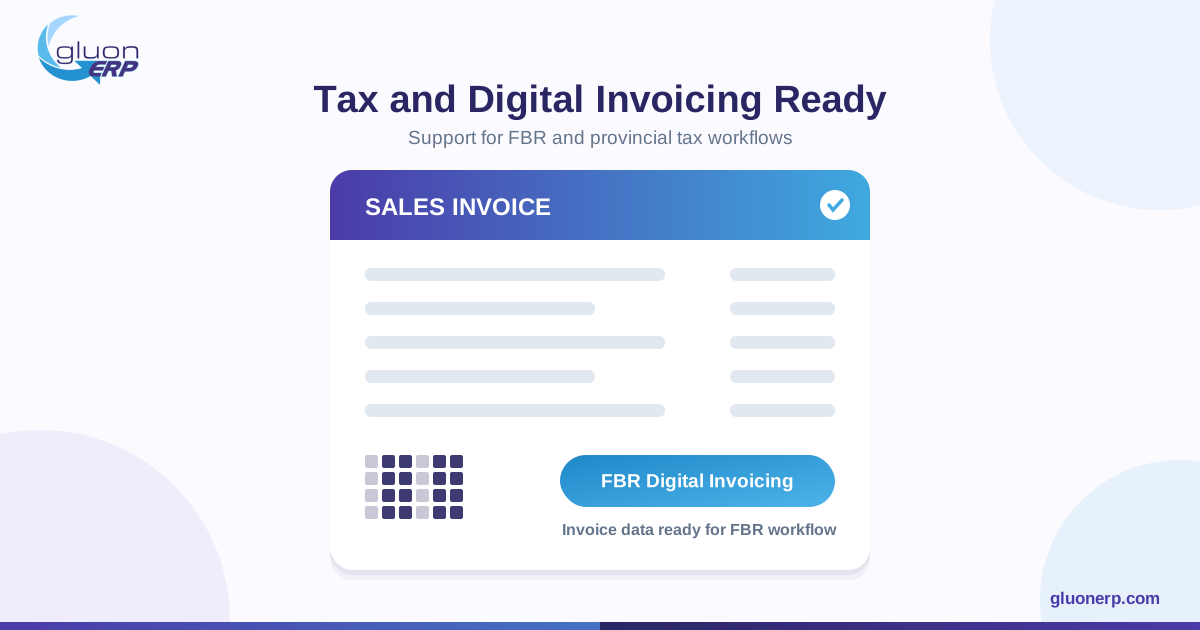
Manufacturers should evaluate whether their ERP supports the required FBR digital invoicing workflow and other applicable provincial tax integrations.
A suitable solution should help manage invoice information, transaction records and relevant reporting processes.
What Should You Consider Before Choosing an ERP in Pakistan?
Not every ERP system is suitable for every manufacturing business.
Consider these factors before making a decision:
Selection factor What to evaluate Industry requirements Does it support your manufacturing process? Scalability Can it support business expansion? Integration Can modules and external systems work together? Reporting Does it provide accurate operational and financial reports? Security Does it offer user roles and access controls? Accessibility Can authorised users access it remotely? Local requirements Does it support relevant Pakistani tax workflows? Support Is implementation and ongoing assistance available?
Why Cloud ERP Software Is Becoming Important for Manufacturers
Traditional systems may restrict access to business information from different locations.
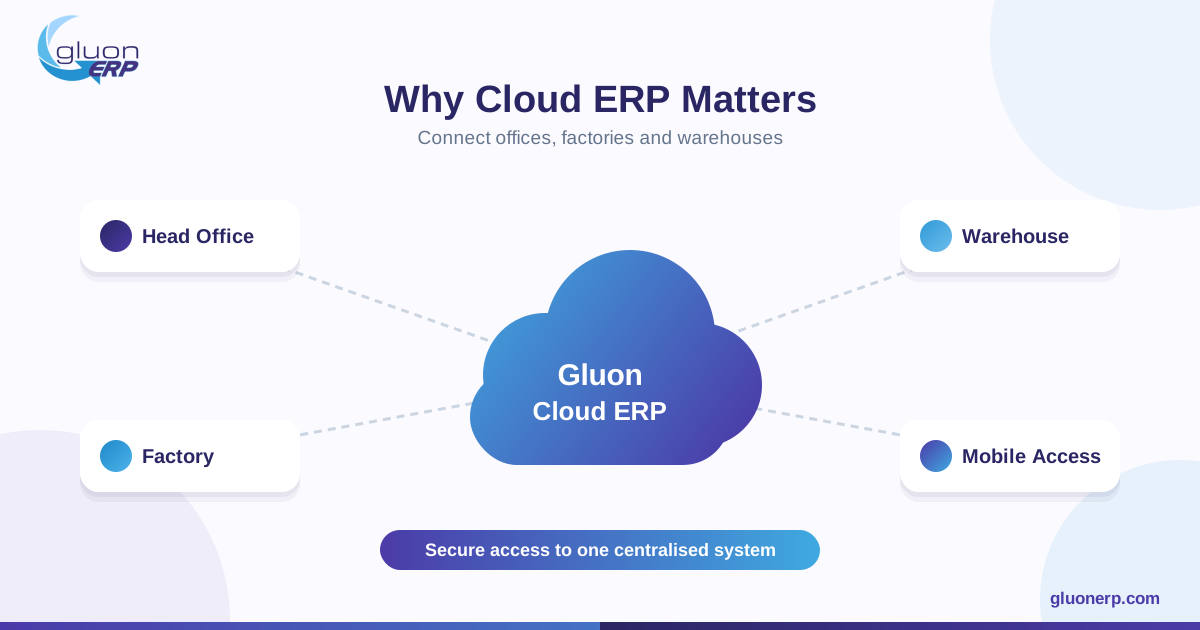
Cloud ERP software allows authorised users to access business information through an internet connection, depending on the system's configuration and access controls.
For manufacturers operating multiple warehouses, offices or production facilities, this can improve coordination.
Some advantages include:
- Centralised business information.
- Remote access to operational reports.
- Better coordination between departments.
- Reduced dependence on disconnected spreadsheets.
- Easier access to updated business information.
- Flexible expansion as business requirements change.
However, businesses should also evaluate hosting security, backup policies, uptime and data ownership before choosing a cloud ERP solution.
How Gluon ERP Helps Manufacturing Businesses
Gluon ERP provides an integrated business management platform designed to connect key business operations.
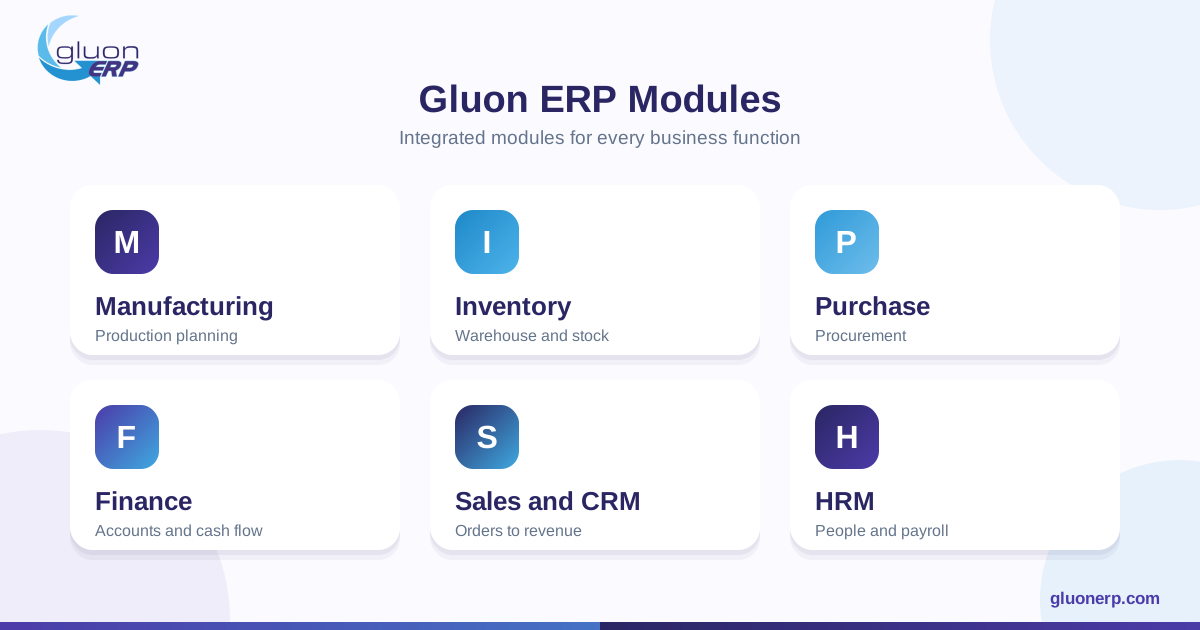
Its modules cover Finance and Accounting, Sales and CRM, Inventory and Warehouse, Purchase and Supply Chain, Manufacturing and Production, HRM, Asset Management and other business functions.
Manufacturing businesses can use Gluon ERP to manage connected operational workflows.
Manufacturing and Production Management
Manage production activities and connect manufacturing operations with inventory and finance.
Inventory and Warehouse Management
Monitor stock movements, receipts, transfers, warehouse balances and inventory records.
Purchase Management
Manage procurement activities, purchase orders, goods receiving and supplier transactions.
Finance and Accounting
Maintain financial records, manage payments and receipts, and access financial reports.
Sales and Distribution
Manage quotations, customer orders, deliveries, sales invoices and receivables.
Business Reporting
Access business information to monitor operations and support management decisions.
With connected modules, Gluon ERP helps businesses reduce disconnected records and improve operational visibility.
Frequently Asked Questions
1. Which ERP is best for Pakistani manufacturers?
The best ERP software depends on your production processes, inventory requirements, accounting needs, industry and budget. Manufacturers should select an ERP that connects production, purchasing, inventory, sales and finance.
2. What is the cost of manufacturing ERP software in Pakistan?
ERP software pricing depends on the number of users, selected modules, implementation requirements, customisation and support services. Businesses should compare the total implementation and ownership costs before selecting a solution.
3. Can ERP software manage raw materials and finished goods?
Yes. Manufacturing ERP software can manage raw material receipts, material consumption, stock transfers, finished goods and warehouse inventory, depending on the available modules.
4. Is cloud ERP suitable for manufacturing companies?
Yes. Cloud ERP can provide authorised access to centralised business information across offices, warehouses and production locations. Its suitability depends on internet availability, security requirements and operational needs.
5. Can ERP software connect production with accounting?
Yes. An integrated ERP connects production, inventory and financial transactions, helping businesses improve production costing, stock valuation and financial reporting.
6. What is the difference between accounting software and manufacturing ERP?
Accounting software primarily manages financial transactions, whereas manufacturing ERP connects accounting with production, inventory, procurement, sales and other business operations.
Choosing the right ERP software is an important decision for any manufacturing business.
The ideal system should not only manage accounts or inventory. It should connect the entire business process, from purchasing raw materials to production, finished goods, sales and financial reporting.
For Pakistani manufacturers looking to improve operational control and business visibility, investing in a suitable ERP solution can support long-term growth.
Looking for ERP software for your manufacturing business?
Explore Gluon ERP and discover how integrated business management can help connect your production, inventory, purchasing, sales and finance operations.
Visit: https://gluonerp.com/
Book a Free Demo Today.
One platform.
Every part of your business.
Request Your Free
Gluon ERP Demo



and ERP insights delivered to your inbox.


